


How to Price Your Items Based on Local Demand
Pricing plays a crucial role in whether a product sells quickly or remains unsold for weeks. Many sellers focus only on their costs when deciding a price. However, the real value of a product is often determined by the market and the demand in a specific area.
Local demand represents how many buyers in your area want a product and how much they are willing to pay for it. Understanding this demand helps sellers price their items competitively while still earning a fair profit.
When sellers learn how to price your items based on local demand, they can attract buyers faster and increase their chances of successful sales. Instead of guessing a price, they use market signals, buyer behavior, and competitor pricing to make smarter decisions.
This guide explains practical methods to determine the right price using local demand insights. By following these strategies, sellers can stay competitive, maximize profit, and improve the speed of their transactions.
Understanding What Local Demand Means
Local demand refers to the level of interest buyers in a particular area have for a product or service. Demand varies depending on location, availability, season, and consumer preferences.
In some cities, certain products may sell quickly because many buyers are searching for them. In other locations, the same item may receive little attention.
This difference shows why it is important to understand the local market before setting a price.
Learning how to price your items based on local demand helps sellers align their prices with buyer expectations. When the price reflects real market demand, buyers respond faster and transactions become easier.
Why Demand Influences Pricing
Demand determines how valuable a product appears to buyers. When many people want the same item, they are often willing to pay a higher price.
When demand is low, buyers become more selective and may look for better deals. Sellers who understand these patterns can adjust their pricing accordingly.
Recognizing Signs of High Demand
Certain indicators reveal strong demand in local markets.
Frequent buyer inquiries, fast responses to listings, and multiple offers often signal that buyers are actively searching for the product.
In such situations, sellers may maintain a stable price or slightly increase it.
If you want to sell faster and avoid delays, check out How to sell used furniture online quickly and start connecting with real buyers today.
Researching the Local Market Before Pricing
Market research is one of the most effective ways to determine an appropriate selling price. By observing other listings in the same area, sellers gain a clear understanding of price expectations.
Research helps identify the typical price range for similar products. It also shows which items sell quickly and which remain unsold.
Studying Similar Listings
Look at listings for similar items in your city. Pay attention to product condition, features, and pricing.
This comparison reveals how other sellers position their products and how buyers respond to different price levels.
Identifying the Average Price Range
When several sellers list the same item, patterns begin to appear. Most listings usually fall within a certain price range.
This range provides a practical benchmark for pricing decisions. Sellers who price their items close to the average often attract more buyer attention.
Observing Buyer Behavior in Your Area
Buyer behavior offers valuable clues about demand. Understanding how buyers respond to different price points can help sellers refine their pricing strategy.
Local buyers often have specific preferences and spending habits that influence their purchasing decisions.
Monitoring Buyer Responses
If your listing receives many messages within a short period, the price may be attractive to buyers.
However, if responses are slow or nonexistent, the price may need adjustment. Observing these reactions helps sellers adapt quickly.
Considering Seasonal Trends
Some products experience seasonal demand changes. For example, cooling appliances sell more during summer, while winter items become popular during colder months.
Seasonal demand should always be considered when determining the final selling price.
Using Competitor Pricing as a Guide
Competitor pricing provides insight into how other sellers value similar products. Understanding these pricing patterns helps maintain competitiveness.
Buyers often compare multiple listings before making a decision. If your price is significantly higher without added value, buyers may choose alternative options.
Positioning Your Price Strategically
Your price does not always have to be the lowest.
If your product is in excellent condition or includes additional benefits, you may justify a slightly higher price.
Strategic pricing helps maintain profitability while still attracting buyers.
Learning from Market Competition
Competitive markets encourage sellers to stay informed about price changes.
Regularly reviewing similar listings allows sellers to respond quickly to shifts in demand and remain competitive.
Balancing Cost, Profit, and Demand
Successful pricing balances three essential factors: cost, profit, and demand.
Ignoring any of these elements can lead to ineffective pricing. Sellers must ensure the price covers their costs while still appealing to buyers.
Calculating Your Base Cost
Start by calculating the total cost of the product. This may include purchase price, maintenance, packaging, or any additional expenses.
Understanding your cost ensures that your price does not result in financial loss.
Adding a Reasonable Profit Margin
After determining the cost, sellers usually add a profit margin. This margin represents the amount earned from the sale.
However, the final price should still reflect local demand. If demand is lower, adjusting the margin slightly may help attract buyers.
Adjusting Prices According to Demand Trends
Markets constantly change due to economic conditions, trends, and buyer preferences. Sellers who monitor these changes can adjust their pricing effectively.
Flexibility allows sellers to respond quickly to market signals.
Increasing Prices During High Demand
When demand rises and buyers show strong interest, sellers may gradually increase prices.
This adjustment helps maximize profit while still maintaining competitiveness.
Lowering Prices When Interest Drops
If a product receives limited attention, reducing the price slightly may attract new buyers.
Small price changes can significantly increase interest and improve the chances of a sale.
Avoiding Common Pricing Mistakes
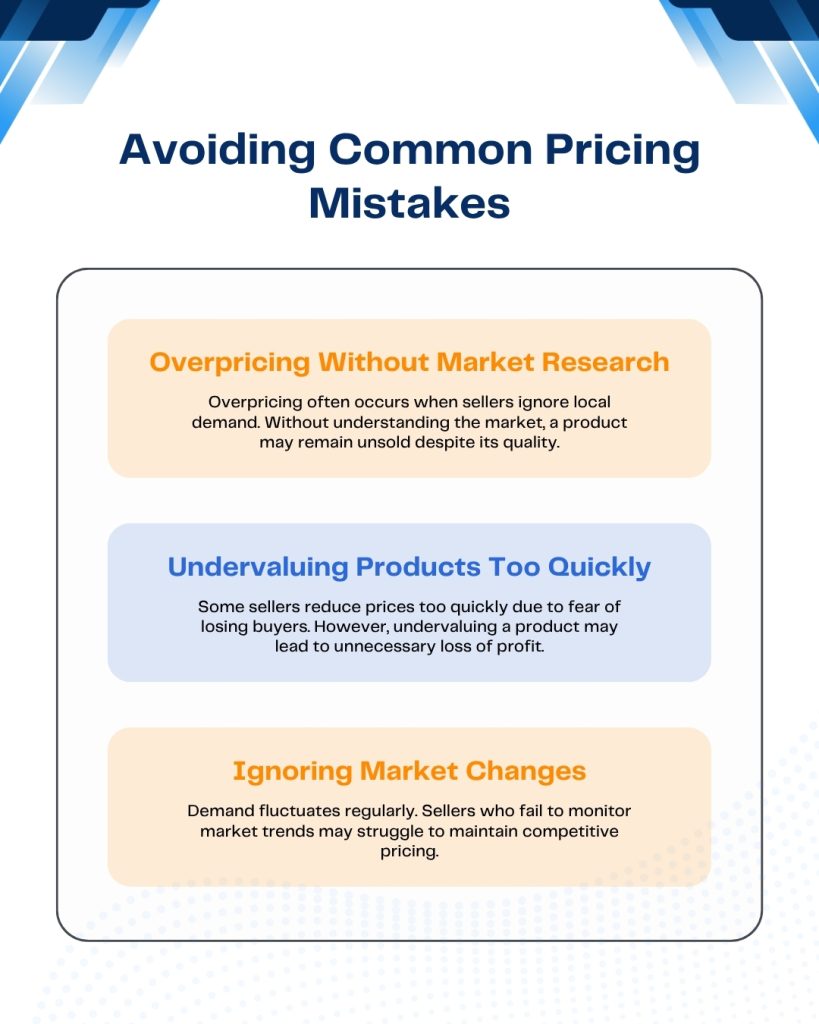

Pricing mistakes can delay sales and reduce profitability. Many sellers struggle because they rely on assumptions rather than data.
Overpricing Without Market Research
Overpricing often occurs when sellers ignore local demand.
Without understanding the market, a product may remain unsold despite its quality.
Undervaluing Products Too Quickly
Some sellers reduce prices too quickly due to fear of losing buyers.
However, undervaluing a product may lead to unnecessary loss of profit.
Ignoring Market Changes
Demand fluctuates regularly. Sellers who fail to monitor market trends may struggle to maintain competitive pricing.
Practical Tips for Pricing Items Locally
Pricing effectively does not require complex tools. A few simple practices can improve results significantly.
Start by researching local listings frequently.
Set an initial price slightly higher than your minimum acceptable amount to allow negotiation.
Monitor buyer responses and adjust pricing gradually when necessary.
By consistently observing the market, sellers can improve their ability to price your items based on local demand and achieve better results.
Conclusion
Pricing is more than just choosing a number. It is a strategic decision that influences buyer interest and sales success.
Understanding local demand allows sellers to align their prices with real market expectations. By researching local listings, observing buyer behavior, and analyzing competitor pricing, sellers can create a balanced pricing strategy.
When you learn how to price your items based on local demand, you improve visibility, attract serious buyers, and increase the chances of completing successful sales.
Smart pricing helps sellers remain competitive while maximizing profit, making it an essential skill for anyone selling products locally.


